08Self-performed capability
Concrete, Foundations, Underpinning & Structural Work — Ontario
Slabs, footings, structural openings and underpinning — self-performed, no hand-offs.
The short version
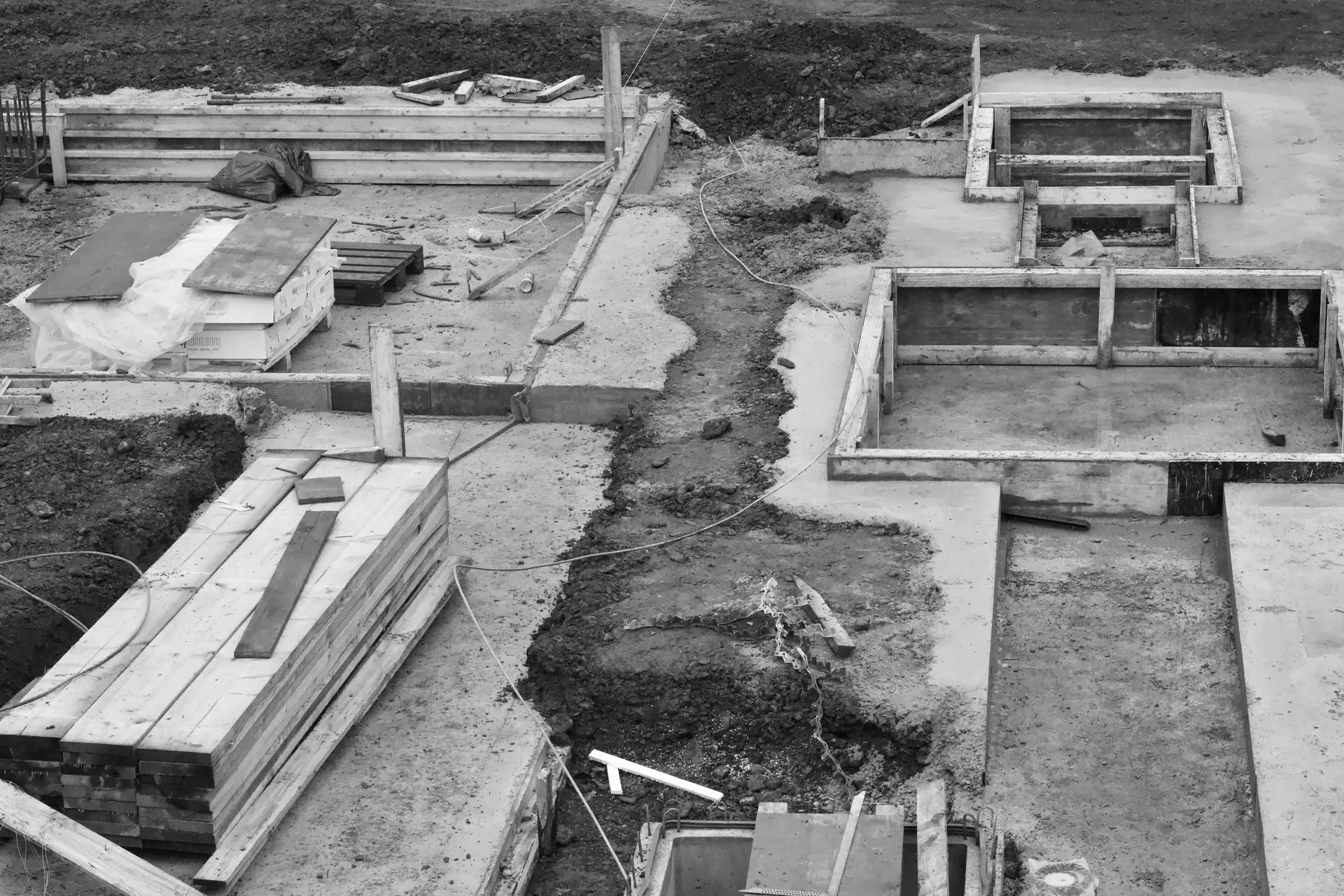
Most contractors sub their concrete out. We do it ourselves. Slabs that have to come up for drainage, a new opening cut through a load-bearing wall, footings for equipment the building was never designed to carry, a basement that has to go deeper before it can be finished — all of it runs on our own crews and our own schedule. That is the difference this makes: when a job hits concrete, it does not stop and wait on somebody else’s calendar, and the quality of what goes back in is ours to answer for.
Based in Brampton, working across the GTA and the rest of Ontario. One contract, one schedule, one crew accountable for the result.
What's included
The scope, in plain terms
No mystery line items. This is the work we take responsibility for.
Where it comes up in a fit-out
- Slab coring, cutting and trenching for drainage, plumbing and conduit
- Infill and re-pour after under-slab work, finished flat and level
- Equipment pads, housekeeping pads and machine bases
- New openings in load-bearing walls and slabs, with the required framing and support
- Structural steel — beams, lintels, posts — installed where a layout removes a wall
- Ramps, landings, curbs and barrier-free entrance work
- Loading docks, exterior pads, stairs and thresholds
Larger structural scopes we self-perform
- Footings and foundations
- Foundation walls, grade beams and piers
- Basement excavation, lowering and underpinning
- Structural repair, crack injection and slab remediation
- Waterproofing, drainage and damp-proofing of below-grade work
Done properly
- Scanning before we cut, so nothing is severed that should not be
- Engineering and permits arranged where the work is structural
- Shoring and temporary support designed for the condition, not improvised
- Reinforcement, mix and curing specified for the loading and the finish
- Flat, level, clean pours — because a finished floor is only as good as the slab under it
Why bring us in
What you get that you might not elsewhere
It removes a hand-off from your schedule
On a fit-out, waiting for a concrete sub to fit you into their week is dead time in the middle of your critical path. Self-performing means the slab comes up on the day the schedule says it does.
The trade that follows is also ours
The crew pouring the infill knows exactly what flooring is going on top of it and what tolerance that needs. When concrete and finishing are two different companies, the tolerance argument happens after the floor is down.
One contract, no finger-pointing
If the drainage does not fall correctly or the pad is out of level, there is nobody else to blame and nobody else to chase. That is the whole point of doing it in-house.
How it runs
From first walk-through to keys
Same sequence every time, so you always know what happens next.
- Step 01
Establish what is actually there
Scan the slab, review any structural drawings, and confirm what is post-tensioned, reinforced or carrying load before anything is cut. Guessing here is how a building gets damaged.
- Step 02
Engineering and permits where required
Anything structural gets an engineer’s involvement and the permits that go with it. We do not cut a load-bearing element on the strength of an opinion.
- Step 03
Shore, cut, excavate
Temporary support installed where it is needed, then the cutting, coring or excavation done with dust and water controlled — particularly when the rest of the building is occupied.
- Step 04
Form, reinforce, pour, cure
Reinforcement and mix specified for the loading and the finish above, poured, finished flat, and given the cure time it needs rather than the cure time the schedule would prefer.
- Step 05
Straight back into the fit-out
Because the same team runs the rest of the job, the trades that follow the pour are already scheduled around it. The concrete stops being an event and goes back to being a step.
Questions
Answered honestly
If the honest answer is “it depends”, we tell you what it depends on.
Do you take concrete work on its own, without a fit-out?
Sometimes, but it is not what we are built around and we would rather be straight with you about that. Our concrete crews exist so our fit-out and renovation projects never stall waiting on a sub. If you have a standalone foundation or underpinning project, call us and we will tell you honestly whether we are the right fit or point you at someone who is.
Why does a fit-out need concrete work at all?
More often than owners expect. A restaurant needs the slab opened for floor drains and a grease interceptor; a salon needs new drainage to wash stations; a clinic needs plumbing under operatories; opening up a floorplate can mean removing a load-bearing wall and installing a beam. Any of those turns a straightforward fit-out into one that needs a crew who can cut, support and re-pour properly.
Can you cut a slab in an occupied building?
Usually yes, with the right controls: scanning first, wet cutting or vacuum extraction for dust, sealed hoarding, noise scheduled around the building’s operations, and protection for whatever is below. Post-tensioned slabs and some condominium and podium structures come with real restrictions, so we confirm the structure and the landlord’s rules before we commit to a method.
Do I need an engineer for structural work?
For anything load-bearing — a new opening in a structural wall, a beam, underpinning, a slab penetration in a structural element — yes, and that engineering is part of the permit. We arrange it and coordinate it. Where an engineer is genuinely not required we will tell you that too, rather than adding a cost that buys you nothing.
Sectors
Who we do this for
Your sector decides which details matter. Here's where this service does the most work.
- Restaurants & BarsHoods, grease traps and health-unit sign-off — handled, on the date you open.
- Salons & SpasWash-station plumbing, real ventilation, and lighting people look good under.
- Gyms & FitnessReinforced floors, serious ventilation, and sound control that keeps the peace.
- Medical & DentalOperatory rough-ins, lead-lined rooms and infection-control finishes.
- Retail StoresStorefronts, glazing and lighting that make the product the hero.
Start your build
Tell us about your space. We'll tell you what it takes.
Tell us about the space and the date you need it open. We'll walk it with you and tell you exactly what it takes.